Best Time to Visit a State Fair: Beat the Crowds
Best time to visit a state fair, hour by hour: an insider timing plan to dodge the lines, the heat, and the crowds. Plan the perfect fair day now.
The best time to visit a state fair is not a single magic hour — it is a set of trade-offs between crowds, heat, ride lines, and how much you want to spend. Most "tips for the fair" articles stop at "go early." That is a start, but a fairground behaves like a living system: the food court peaks at a different moment than the midway, the grandstand empties the concourse during a headline show, and the parking lot fills long before the gates feel busy. This guide gives you an actual timing plan — which day, which hours, and what to hit in what order — so a single ticket buys you the calmest, coolest, and cheapest version of the day.
Treat the schedule below as a framework you tune to your specific fair. Opening times, discount days, and show start times vary by event, so always cross-check the official calendar before you commit. What stays consistent, fair after fair, is the rhythm of the crowd.
The Three Variables That Decide Your Ideal Window
Before you pick a day, decide what you are optimizing for. Almost every choice at a state fair pulls against another, and the "perfect" time depends on which of these three you weigh most heavily.
- Crowds and lines. The single biggest driver of a good or bad day. Fewer people means shorter waits for rides, food, and restrooms — and better photos.
- Heat and daylight. Late-summer and early-fall fairs run hot in the afternoon. Midday sun on an open midway is brutal; mornings and evenings are the humane windows.
- Cost and deals. Many fairs run discounted-admission or discounted-ride promotions on specific weekdays or during early hours. Timing your visit to those windows can meaningfully cut the bill.
You cannot maximize all three at once. A weekday morning wins on crowds and heat but may miss a weekend-only concert. A discount evening saves money but draws the biggest crowd of the week. Rank these three before anything else, because the rest of your plan flows from that ranking. If you are still deciding which fair to attend at all, our guide to planning a fair trip helps you match an event to the kind of day you want.
Best Day of the Week to Go
Day of the week matters more than most visitors expect. The gap between a Tuesday and a Saturday can be the difference between walking onto a ride and standing in a 40-minute line for it.
| When you go | Crowd level | Heat exposure | Deals likely | Best for |
|---|---|---|---|---|
| Weekday morning | Lowest | Low | Often (early/senior specials) | Families, ride-heavy days, photographers |
| Weekday evening | Moderate | Moderate | Sometimes (dollar nights) | After-work visits, lights and food |
| Weekend morning | Moderate to high | Low | Rare | Balanced first-timer visit |
| Weekend evening | Highest | Moderate | Rare | Concerts, nightlife, full atmosphere |
Use the table as a starting frame, not a guarantee — every fair has its own quirks, and a special event can flip a quiet weekday into a packed one. As a rule, the earlier in the week and earlier in the day you go, the more of the fair you get to yourself. Opening-weekend Saturday nights and the final weekend are the two most crowded windows of any fair's run, so avoid them unless the crowd is the point.
An Hour-by-Hour Game Plan for One Day
If you only get a single day, sequence it against the crowd rather than wandering. Here is a plan that works at most large state fairs, adjusted to your gate's opening time.
- At the gate, right at opening. Arrive 15–20 minutes before the gates open. You will park closer, walk onto rides with no line, and see the grounds clean and unhurried. This first hour is the most valuable of the entire day.
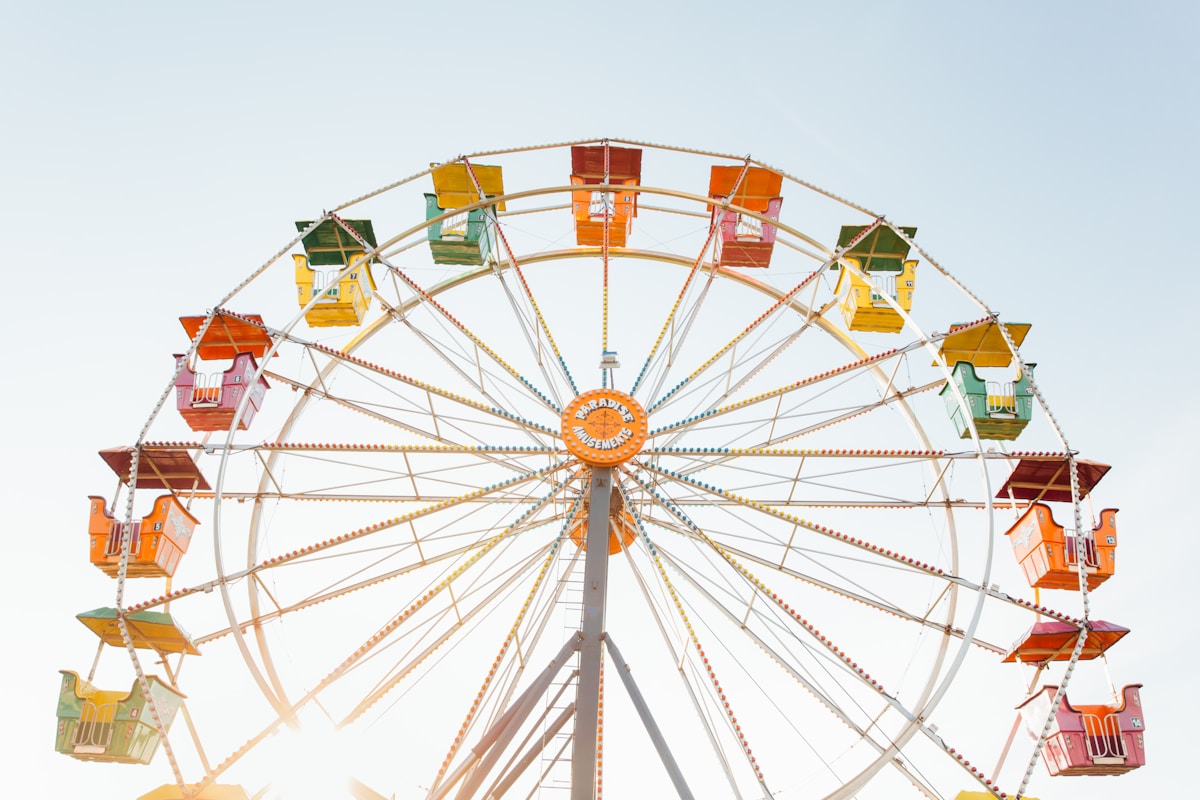
- First 90 minutes: rides and photos. Hit the marquee rides and the Ferris wheel while lines are empty and the light is soft. This is also the best window for the barns and animal exhibits before school groups arrive.
- Late morning: exhibits and shopping. As the sun climbs, move indoors — commercial buildings, art halls, and agriculture displays are air-conditioned or shaded and stay calm until midday.
- Early lunch, before noon. Eat by 11:30. Food lines balloon between noon and 2 p.m. Beating that window saves 20–30 minutes and gets you a shaded table.
- Midday: escape the peak. From roughly 1 to 4 p.m. the grounds are hottest and most crowded. Catch a seated, shaded show, take a break, or leave and return if re-entry is allowed.
- Late afternoon: second wind. Crowds thin slightly before the evening surge. Revisit a favorite ride or knock out anything you missed.
- Evening: lights, then leave ahead of the rush. The fair is magical after dark, but plan your exit before the final show lets out, when everyone floods the gates and lots at once.
The through-line is simple: front-load the things that draw lines — rides, popular food stands, marquee animals — into the first two hours, and save low-line activities for peak periods.
Timing the Attractions That Draw the Longest Lines
Not everything peaks at the same moment, and knowing the specific rhythms lets you skip the worst waits entirely.
- Rides. Busiest from mid-afternoon through mid-evening. Ride at opening or during a headline concert, when the midway briefly empties as crowds move to the grandstand.
- Signature food stands. The famous, photographed items build the longest lines at classic meal times. Eat off-peak — a 10:30 a.m. treat or a 4 p.m. snack — to walk right up.
- Grandstand and arena shows. Reserved-seat concerts pull thousands out of the general grounds. That is your golden window for rides and food elsewhere.
- Livestock shows and competitions. These run on a fixed schedule; check the daily program and build your route around the one or two you actually want to see.
- Restrooms and ATMs. Both spike right after big shows end. Handle them proactively during lulls, not in the post-show crush.
If your fair sells them, timed or express passes for the marquee rides can be worth it on a busy day — weigh the cost against the hours you would otherwise spend in line. Our overview of fair tickets and admission options explains what is usually worth buying ahead versus at the gate.
Season and Weather: Opening, Middle, or Closing?
Which part of a fair's multi-day run you choose changes the experience as much as the hour does.
Opening days are fresh — everything is clean, fully stocked, and staff are energized — but the first weekend often brings launch-day crowds and media attention. Mid-run weekdays are the sweet spot for most visitors: the fair is fully operational, the opening rush has passed, and the closing surge has not begun. Closing days carry real energy and sometimes end-of-run deals, but expect the thickest crowds, tired grounds, and the occasional sold-out food item.
Weather deserves its own line in your plan. Check the forecast the night before and shift your hours accordingly: on a scorcher, compress your outdoor time into the morning and after sunset; on a cool, overcast day, the usual midday lull barely appears and you can roam freely. A light rain shower, counterintuitively, can be the best time on the grounds all week — the fair stays open, the crowd thins dramatically, and the lines melt away for anyone willing to bring a poncho.
When to Ignore All of This and Go at Peak Anyway
Every rule above optimizes for a calm, efficient day — but calm is not always the goal. Sometimes the crowd is the entire point of a state fair, and going at peak is the right call.
Go on the busiest night if you are there for a specific grandstand concert, for the full sensory rush of a packed midway lit up after dark, or for a signature nighttime event like a demolition derby or fireworks. First-timers who want to feel the fair at full volume should embrace a Saturday evening, lines and all — the atmosphere is a feature, not a bug. Families with very young children, by contrast, will almost always have a better time on a quiet weekday morning, when the pace is gentle and a stroller can actually move.
The American state fair tradition is built on exactly this range of experiences — quiet mornings among prize livestock, roaring nights on the midway — and its roots run deep, as you can trace through the story of the original Corn Palace festival that gives this magazine its name. Decide which version you came for, then use the timing above to get the most of it. The best time to visit a state fair, in the end, is the hour that matches the day you actually want to have.